Finance · Machine learning · Luxembourg
Alessandro Tugnetti
Data Scientist · PhD in Finance
I am a data scientist based in Luxembourg with a research background in finance and economics. I work with complex data, statistical models and machine learning to investigate economic questions, evaluate forecasts and communicate results. I completed my PhD in Finance at the University of Luxembourg in April 2026.
My research focuses on digital-asset markets and long-run economic growth. I combine econometric analysis and machine learning with careful data preparation and out-of-sample evaluation. Alongside research, I contribute to QFI alumni career research and community initiatives, and I am continuing my professional development through WeSTEM+’s Applied Data & AI Academy.
Let’s connect. Get in touch
-
Started WeSTEM+’s Applied Data & AI Academy, with completion expected in April 2027.
-
Defended my PhD dissertation, Essays in Empirical Finance, at the University of Luxembourg.
-
Co-founded the QFI Alumni & Students Association and became Vice President, with responsibility for its Research area.
-
Pricing dynamics and herding behaviour of NFTs appeared in European Financial Management. Read the article.
-
Our review of NFT pricing determinants, applications and opportunities appeared in Journal of Economic Surveys. Read the article.
-
Completed Computational Methods in Financial Mathematics at the London School of Economics and Political Science.
-
Contributed to Design Execution and Evaluation of Research in Finance and Economics at the University of Luxembourg. Teaching details.
-
Participated in the University of Luxembourg’s Ideation Camp, 10th Edition.
-
Completed blockchain training through the University of Zurich and MasterZ.
-
Started as a Doctoral Researcher in Finance at the University of Luxembourg. My university teaching activities also began in 2022.
-
Joined the IAS Young Academics research-support initiative at the University of Luxembourg.
-
Completed the IBM Data Science Specialization on Coursera. Credential.
-
Started volunteering with Serve the City Luxembourg.
-
Joined DWS Investments in Luxembourg to work on liquidity stress testing.
-
Completed my MSc in Quantitative Finance and Insurance at the University of Turin and Master of Research in Economics at Collegio Carlo Alberto.
-
Joined the SHARP Consulting career mentoring programme.
Selected Publications
All research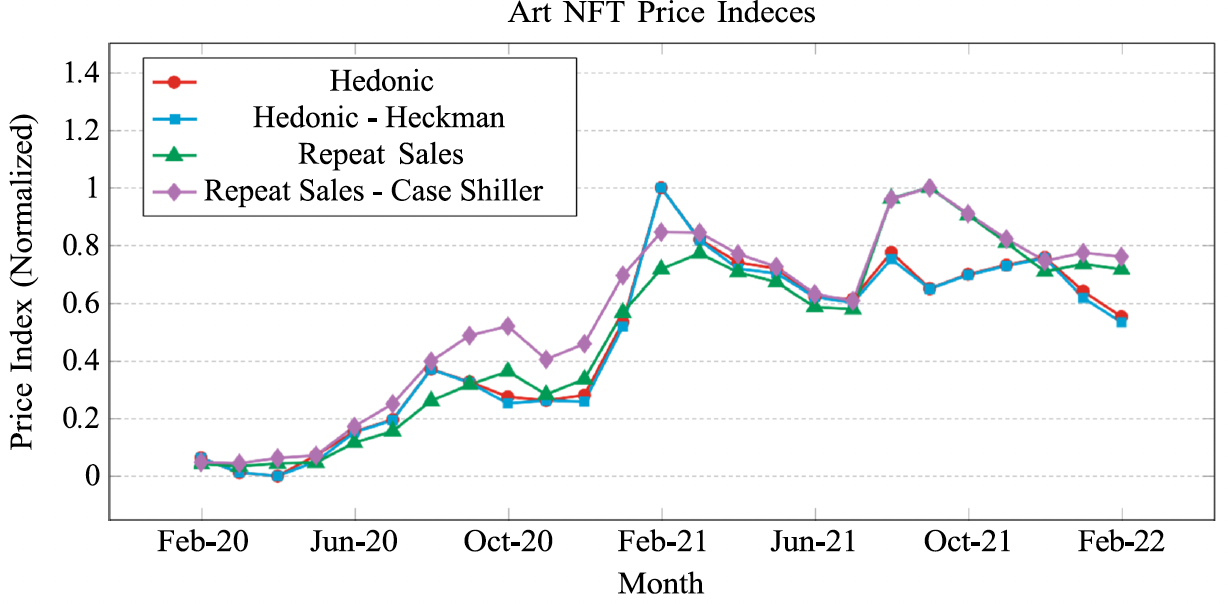


Opfield Machine Learning Demo · Opfield Networks
Loading the portrait…
(Reconstruction steps: 0/3000)A Hopfield network is an associative memory inspired by the Ising model. Its neurons interact to reach stable, low-energy states, allowing a partial pattern to recover a stored memory.
This network stores a simple 50 × 50 blue-and-white pixel portrait. Each pixel is one binary neuron. The left half starts blank. Click Retrieve Pattern to recall it from the visible half.
E = −½ ∑i ≠ j Wij si sj
A small educational demonstration inspired by Morris Huang’s website. The network recalls a learned image; it does not generate a new face. Recall is computed first; 3000 reconstruction steps then display the recovered pixels.